
Trav's short answer
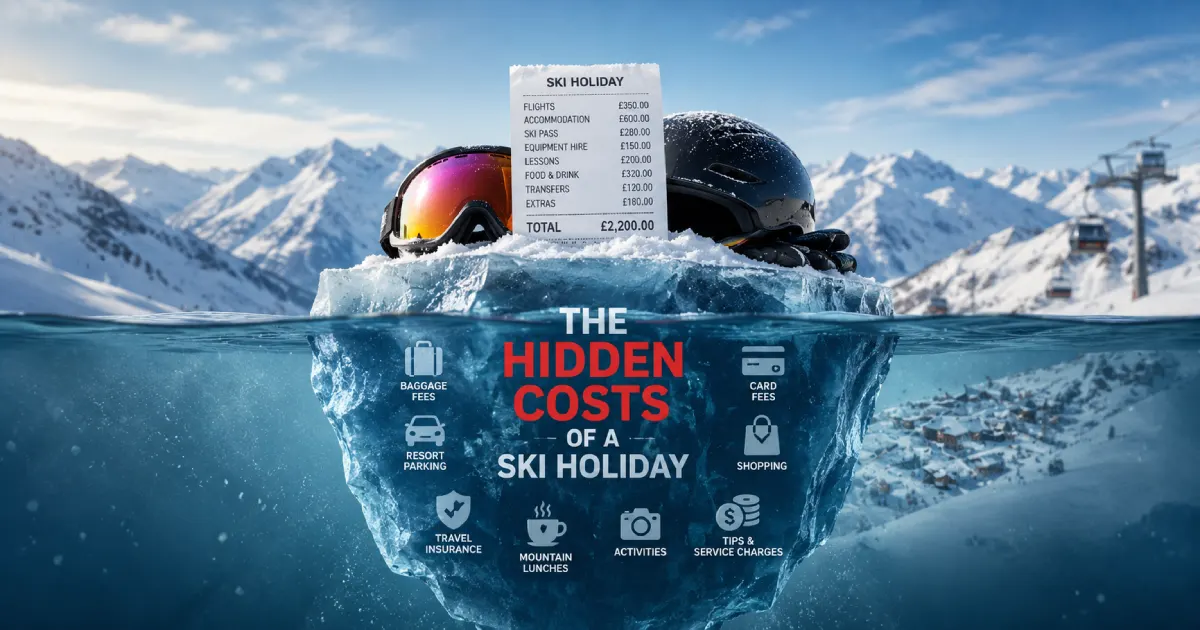
The advertised holiday price is only useful if you know what it includes.The biggest extras are usually lift access, ski hire, lessons, baggage or ski carriage, airport-to-resort transport, winter-sports insurance and day-to-day spending in resort. Check those before comparing two holidays.
Where the extras usually appear
01 / Travel to the resort
Baggage and transfers can change the real travel price
A flight can look cheap before hold luggage or ski equipment is added. Airline rules are not the same: some tickets can absorb skis within a checked-baggage allowance, while other airlines sell ski or sports-equipment carriage separately. Check both directions of travel and the weight limit before deciding whether taking your own skis is cheaper than hiring.
The airport is only part of the journey. Shared or private transfers, rail tickets, resort buses, hire cars, fuel, tolls, parking and winter equipment for a car can all sit outside the accommodation price. Package holidays sometimes include transfers, but independent bookings often do not.
02 / Skiing costs
The lift pass is often the largest extra after travel and accommodation
Many accommodation or flight deals do not include a lift pass. In large Alpine areas, a multi-day pass can run to several hundred euros per adult. As a concrete example, Les Arcs lists a €412 adult six-day pass for winter 2026/27. A local-area pass, beginner pass or shorter duration can be cheaper, so buying the biggest domain automatically is not always the best value.
Lift pass
Check the exact ski area, number of days, age bands and whether any deposit or hands-free card is separate.
Equipment hire
Skis or board, boots, poles and helmet may be priced as different packages. Premium equipment and damage cover can cost more.
Lessons
Group or private lessons are normally separate. Beginners should compare the whole cost of tuition, pass and hire rather than accommodation alone.
If you're learning, our beginner ski holidays page is a better starting point than choosing a resort solely from its headline package price.
03 / Spending in resort
Small daily costs are easy to ignore before the trip
Mountain lunches, coffees, drinks, groceries and evening meals can add up quickly, especially in high-altitude or purpose-built resorts where there may be fewer cheap alternatives. Self-catering can reduce the bill, but only if you actually plan to cook rather than paying for restaurants most nights.
- Tourist tax: local accommodation taxes are often collected separately and can vary by destination and accommodation type.
- Cleaning and linen: some apartments quote these separately from the weekly rental.
- Parking: central or covered resort parking can be another charge if your accommodation has no space.
- Activities: sledging, spas, swimming pools, ice skating and other non-ski activities may not be included.
- Card and cash costs: foreign-exchange mark-ups, cash withdrawals and poor conversion rates are avoidable but easy to overlook.
04 / Family extras
Family ski trips multiply the extras as well as the headline price
One adult's lift pass, hire and lunch is manageable in isolation; paying versions of those costs for several people is where a family budget moves quickly. Ski school, childcare, helmets, extra luggage and airport transfers can matter as much as a small difference in hotel price.
Age rules can work in your favour because resorts often have child, junior or family lift-pass rates. But the age bands differ, so check the actual resort tariff for your children rather than assuming “kids ski free”. For more planning around those trade-offs, see our family ski holidays guide.
05 / Total-cost check
Compare the total trip cost before paying the deposit
A holiday with a slightly higher headline price can be cheaper overall if it already includes transfers, luggage, lift passes or meals. Before booking, run through the same checklist for every option.
Winter sports are not automatically covered by every standard travel-insurance policy. Check the activities, medical cover, mountain rescue, equipment and any off-piste restrictions rather than assuming ordinary travel cover is enough.

Trav's final word
The cheapest ski holiday is the cheapest total, not the cheapest headline price
Put travel, lift access, equipment, lessons, insurance and resort spending beside the advertised price before comparing deals. Once those extras are visible, it becomes much easier to tell whether a bargain is actually a bargain.