
Trav's short answer
Summer skiing in Europe is not disappearing overnight, but the traditional July-and-August glacier season is clearly becoming shorter, less predictable and harder to operate.As of 18 August 2026, the major outdoor summer ski areas that would normally keep turns going into late summer are not operating for skiing. Several closures are officially described as temporary, so this is not the end of European glacier skiing. But when Zermatt, Saas-Fee and Passo Stelvio all have to stop because safe snow and glacier conditions cannot be maintained, it is a significant warning about the future of the classic summer ski season.
What happened?
Europe has temporarily run out of outdoor lift-served summer skiing
That followed temporary shutdowns at Zermatt and Saas-Fee in Switzerland. With Hintertux also not operating for skiing in mid-August, specialist ski outlets reported that there was no outdoor lift-served summer skiing operating in Europe.
The key distinction: this is a current operational snapshot, not an announcement that European summer skiing has permanently ended. The stronger conclusion is that lift-served skiing through the hottest part of summer is becoming much harder to guarantee, even at some of the Alps' highest glacier resorts.
The numbers behind the story
Resort notices, GLAMOS/SCNAT and summer-ski reporting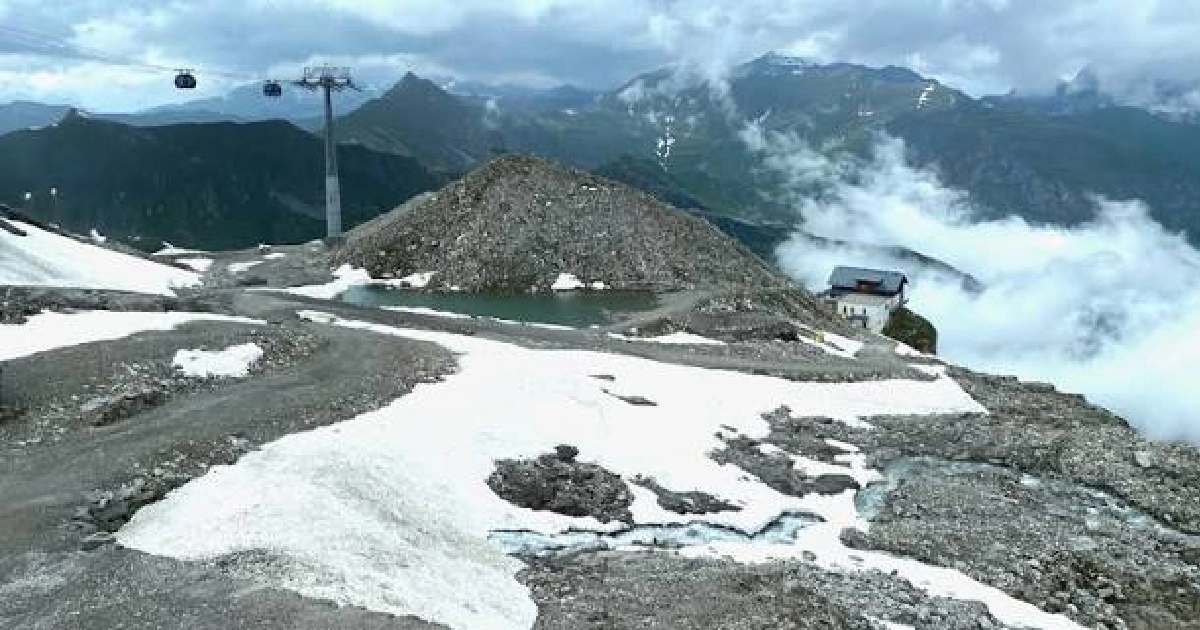
Which resorts have stopped?
The closures have hit some of Europe's most reliable glacier ski areas
The most striking part of the 2026 story is not one resort closing. It is several of the best-known summer ski glaciers reaching the same conclusion within a few weeks: conditions were no longer good enough to operate skiing safely through the heat.
Zermatt
Zermatt Bergbahnen temporarily suspended public summer skiing on the Theodul Glacier after persistent high temperatures, limited overnight cooling, thunderstorms and changing snow and glacier conditions. Limited Swiss-Ski training access was initially treated separately.
Saas-Fee
Saastal Bergbahnen temporarily closed the summer ski area from 10 August, saying persistent heat had changed snow and glacier conditions enough that the required quality and safety of pistes and glacier infrastructure could no longer be guaranteed.
Passo Stelvio
SIFAS suspended skiing on the Stelvio Glacier until further notice. Its official notice cited persistent heat waves at altitude, a lack of night-time cooling and refreezing, and frequent storms that further compromised glacier conditions.
Hintertux
Hintertux's live lift-status page currently says there are no ski operations and that ski operations are expected to begin again in late September 2026. The glacier cable cars remain active for summer sightseeing and other activities.
When temperatures stay too high through the night, pistes do not firm up properly. Softening snow, exposed ice, crevasses and changing glacier geometry can make grooming, lift access and safe public skiing much more difficult — long before every patch of snow has physically disappeared.
Is summer skiing disappearing?
The bigger trend is fewer resorts, shorter seasons and more weather-dependent opening windows
The dramatic August closures fit a much longer pattern. Snow-Forecast's 2026 review says Europe had more than 40 summer ski areas in the 1980s. Only around a dozen have continued to open in summer in recent years, and many of those now operate for weeks rather than entire summers.
The change is visible in famous names. Tignes once marketed near year-round skiing but now concentrates its glacier skiing into a much shorter early-summer period. Hintertux, once synonymous with 365-day skiing, now markets Austria's longest ski season rather than continuous year-round skiing, and its current 2026 status points to a late-September restart.
The underlying glacier trend is difficult to ignore. In its 2025 update, the Swiss Academy of Sciences and GLAMOS reported that Swiss glaciers had lost 25% of their volume since 2015. The same release said more than 1,000 small Swiss glaciers had already disappeared. That does not translate directly into a fixed closing date for any ski area, but it steadily reduces the margin resorts have for maintaining reliable summer pistes and lift infrastructure.
These bars are an editorial illustration of the changing seasonal pattern, not a forecast or probability model. Actual opening dates depend on each glacier, fresh snow, overnight temperatures, safety inspections and individual resort decisions.
What happens next?
Summer skiing may survive — but increasingly outside the hottest weeks
There are good reasons not to write an obituary for European summer skiing yet. The current shutdowns at Zermatt, Saas-Fee and Passo Stelvio are temporary rather than permanent closures, and operators have said they will reopen when conditions allow. Autumn glacier skiing also remains important, with several Austrian areas normally ramping up as temperatures fall.
What appears much less secure is the old assumption that a skier can simply choose a famous glacier resort and expect lift-served skiing throughout July and August. If warm nights prevent refreezing, resorts may shorten hours, restrict access to race teams, pause for days or weeks, or abandon the midsummer window altogether.
There is also a growing divide between outdoor glacier skiing and summer snow sports more broadly. Indoor snow centres continue to offer year-round skiing in Europe, but they are a very different experience from taking a lift onto a high Alpine glacier in August.
What does this mean for skiers?
Treat a summer glacier trip as conditions-dependent, not as a guaranteed ski holiday
For holidaymakers, the biggest lesson is not that you should never plan a summer ski trip. It is that the trip now needs a strong Plan B. Hiking, biking, glacier sightseeing and other mountain activities can still make the destination worthwhile if ski operations are paused, but anyone travelling specifically to ski should verify conditions as close to departure as possible.

Trav's final summary
Summer skiing is not gone, but the classic European glacier season is shrinking
The fact that Europe can reach mid-August with no outdoor lift-served summer skiing operating is significant. The 2026 closures are temporary, yet they sit inside a much longer decline in the number of summer ski areas and the length of their seasons. For skiers, the realistic future is likely to mean shorter windows, more last-minute operating decisions and a greater emphasis on early summer and autumn rather than guaranteed skiing through the hottest weeks of July and August.