Trav's short answer
Skiing is expensive because you are paying for both a ski area and a winter holiday at the same time.Resorts have to run lifts, groom pistes, make snow where needed, maintain mountain infrastructure and staff the ski area. Travellers then add accommodation, lift passes, equipment, lessons, winter-sports insurance, baggage and transfers. The price is highest when those costs meet peak-week demand in a famous resort.
01 / Mountain costs
Ski resorts are expensive places to operate
A ski area is not simply a hillside with snow on it. Before the first skier arrives, the resort has already committed money to lifts, piste machines, snowmaking, maintenance, safety work and staff. Much of that infrastructure exists solely to make the mountain usable during a limited winter season.
Chairlifts, gondolas and cable cars are mechanical transport systems that need inspections, maintenance, electricity and trained staff. Pistes are groomed overnight by specialist machines. Ski patrols, lift teams, mechanics and snowmaking crews work across terrain that is harder and more expensive to access than an ordinary town-centre workplace.
Snowmaking adds another layer. It requires installed equipment, water supply, pumping, suitable temperatures and energy. Ski areas continue to invest in more efficient systems because snowmaking is a meaningful part of resort operations; the National Ski Areas Association's snowmaking guidance describes how newer equipment and automation are used to reduce energy and resource use.
The difficult bit is seasonality. A hotel can trade all year and a railway can carry passengers every month. A ski area may have only a few winter months in which to recover a large share of its annual operating and maintenance costs. That helps explain why a day on the mountain can cost far more than access to many other outdoor activities.
02 / Lift passes
Why are ski lift passes so expensive?
A lift pass pays for more than the ride uphill. It is the main way a ski area funds the network that keeps the slopes open: lifts, piste preparation, snowmaking, patrols, maintenance and mountain services.
The price also reflects what you are buying access to. A small local hill with a handful of lifts is a different product from a huge linked ski area with high-speed gondolas, dozens of lifts and hundreds of kilometres of pistes. Larger areas can offer better variety, but they also have more infrastructure to operate.
Demand matters as well. Christmas, New Year, February school holidays and other peak periods put more pressure on the same amount of mountain capacity. Popular high-altitude and internationally known resorts can charge a premium because more people want the same dates, beds and lift access.
For value, compare the pass with the skiing you will actually use. A beginner who spends most of the week on nursery slopes may not need the same area coverage as an experienced skier planning long days across a linked domain. Our resort comparisons are a better place to compare terrain and resort fit than simply assuming the biggest ski area is automatically the best buy.
03 / The holiday
Accommodation, travel and food can cost as much as the skiing
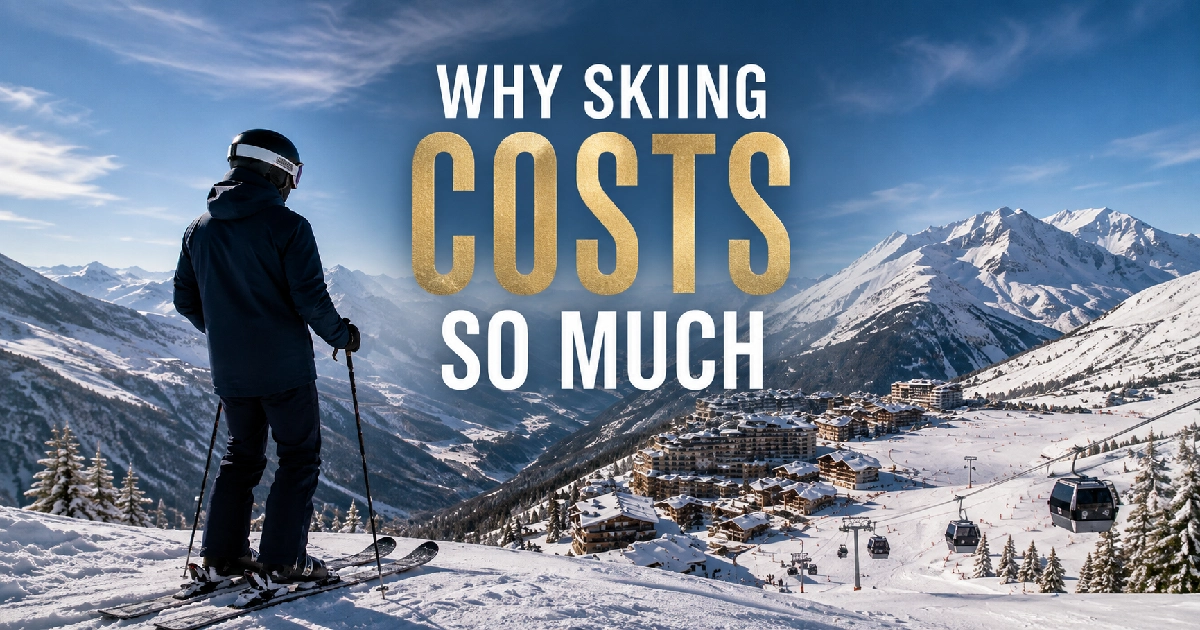
Even if lift passes were cheap, a ski holiday could still be expensive because mountain resorts have awkward economics of their own. Buildable land can be limited, demand is concentrated into a short season and the most convenient properties are close to lifts, ski-school meeting points and village centres.
Accommodation carries a location premium
Ski-in/ski-out hotels and apartments save time, but that convenience usually has value attached to it. A property a short bus ride away can be much cheaper than one beside the main gondola, even when the rooms themselves are similar. Peak weeks amplify the difference because families and groups are competing for a fixed number of beds.
Getting to a mountain resort adds extra stages
A city break might need a flight and a short metro journey. A ski trip can involve flights or rail, airport parking, hold baggage, ski carriage, a long transfer or hire car, tolls and winter driving costs. None of those is individually unique to skiing, but they often arrive together.
Food is affected by resort logistics
Mountain restaurants and shops have to move staff and supplies into places where access is less straightforward and demand is highly seasonal. On-mountain dining can also carry a convenience premium because your alternatives are limited once you are halfway through a ski day.
This is why the cheapest advertised package is not always the cheapest holiday. Compare the total trip: travel, transfers, baggage, accommodation, board basis, lift pass and the ski extras you actually need. That is the same approach we use across Find Cheap Ski Holidays when judging value.
04 / Ski extras
Beginners feel the cost most because almost everything is an extra
The first ski holiday is often the most expensive one to set up. A regular skier may already own clothing, goggles, gloves and a helmet. A beginner can be buying or hiring several items for the first time while also paying for lessons.
Equipment is specialist and has to be maintained
Skis, snowboards, boots, poles and helmets are specialist products. Hire shops need enough stock to cover different sizes and ability levels, then inspect, service and replace that equipment. Renting avoids the purchase price and airline carriage, but it still adds another line to the holiday budget.
Lessons are labour-intensive
Ski instruction is delivered by trained instructors in small groups or private sessions. Capacity is limited by the number of instructors and suitable lesson slots, which is why popular times can sell out during school holidays. Beginners should treat lessons as part of the core trip cost rather than an optional extra added at the end.
Winter-sports insurance matters
Standard travel insurance does not always cover skiing. Winter-sports policies can include cover for equipment and, depending on the policy and circumstances, unused lift passes or lessons. The Ski Club of Great Britain's insurance guide is a useful reminder to check the wording rather than assuming skiing is included.
If it is your first trip, our beginner ski holiday guide covers the practical costs and logistics that are easiest to miss.
05 / Better value
How to make skiing cheaper without choosing a bad holiday
The biggest savings usually come from changing the structure of the trip rather than trimming a few pounds from lunch. Resort, week and package inclusions have more influence on the final total than most small in-resort purchases. For the longer-term price picture, see Has Skiing Become More Expensive Over Time?
- Choose the week before the resort. If your dates are flexible, compare the same destination outside Christmas, New Year and major school-holiday weeks.
- Compare the complete holiday cost. Add transfers, baggage, lift passes, equipment and lessons before deciding which package is cheapest.
- Look beyond the famous names. A smaller or less fashionable resort can offer excellent pistes without the accommodation premium attached to a headline destination.
- Pay for location deliberately. Ski-in/ski-out is convenient, but a reliable ski bus or short walk can save a meaningful amount if you do not need doorstep access.
- Book scarce extras before peak weeks. Equipment sizes, ski-school places and convenient lesson times can disappear before the cheapest headline holiday does.
- Match the lift pass to your skiing. Do not pay for a vast linked area if your group will spend most of the week on a small part of it.
- Pick the board basis that suits how you eat. Self-catering can reduce restaurant spending; half board can make budgeting simpler. The cheaper room rate is not always the cheaper week.
- Reuse clothing and accessories. Once you own suitable outerwear, goggles and gloves, later ski trips can be noticeably cheaper to set up than the first one.
There is no single cheapest formula. A self-catering apartment can work well for one group while a package with transfers and ski extras included can be better value for another. The useful comparison is what you will actually pay for the whole trip.
06 / FAQ
Frequently asked questions about the cost of skiing
Why is skiing so expensive compared with a beach holiday?
A ski holiday has several ski-specific costs that a beach holiday does not: lift access, mountain infrastructure, equipment, lessons and winter-sports cover. Resorts are also seasonal and often remote, which can push up accommodation, transport and food costs.
What is usually the most expensive part of a ski holiday?
There is no universal answer. Accommodation can dominate in premium resorts and peak weeks, while lift passes become a major cost for larger groups. Beginners can spend more on lessons and equipment hire. Compare the whole trip rather than assuming one category will always be the biggest.
Why are lift passes so expensive?
Lift-pass revenue helps pay for the operating system behind the ski area: lifts, maintenance, piste grooming, snowmaking, patrols and staff. Larger and more heavily developed ski areas generally have more infrastructure to fund.
Is skiing more expensive for beginners?
Usually at the start. Beginners are more likely to need lessons, equipment hire and clothing at the same time. Repeat trips can become cheaper once you own suitable clothing and know which extras you actually use.
Can skiing be affordable?
Yes, but it depends heavily on where and when you travel. Flexible dates, smaller resorts, sensible accommodation locations and careful comparison of package inclusions can reduce the total substantially without cutting out the skiing itself.
Final summary
Why does skiing cost so much?
Skiing is expensive because several costly systems and services are bundled into one trip. The resort has to operate mountain infrastructure during a short season, while the skier still has to pay for the normal parts of a holiday.
- Mountain infrastructure
Lifts, grooming, snowmaking, patrols and maintenance all sit behind the lift-pass price. - Peak-week accommodation
Limited resort beds and high demand make location and travel dates particularly important. - Ski-specific extras
Equipment, lessons, insurance, baggage and transfers can turn a cheap headline price into an expensive week.